
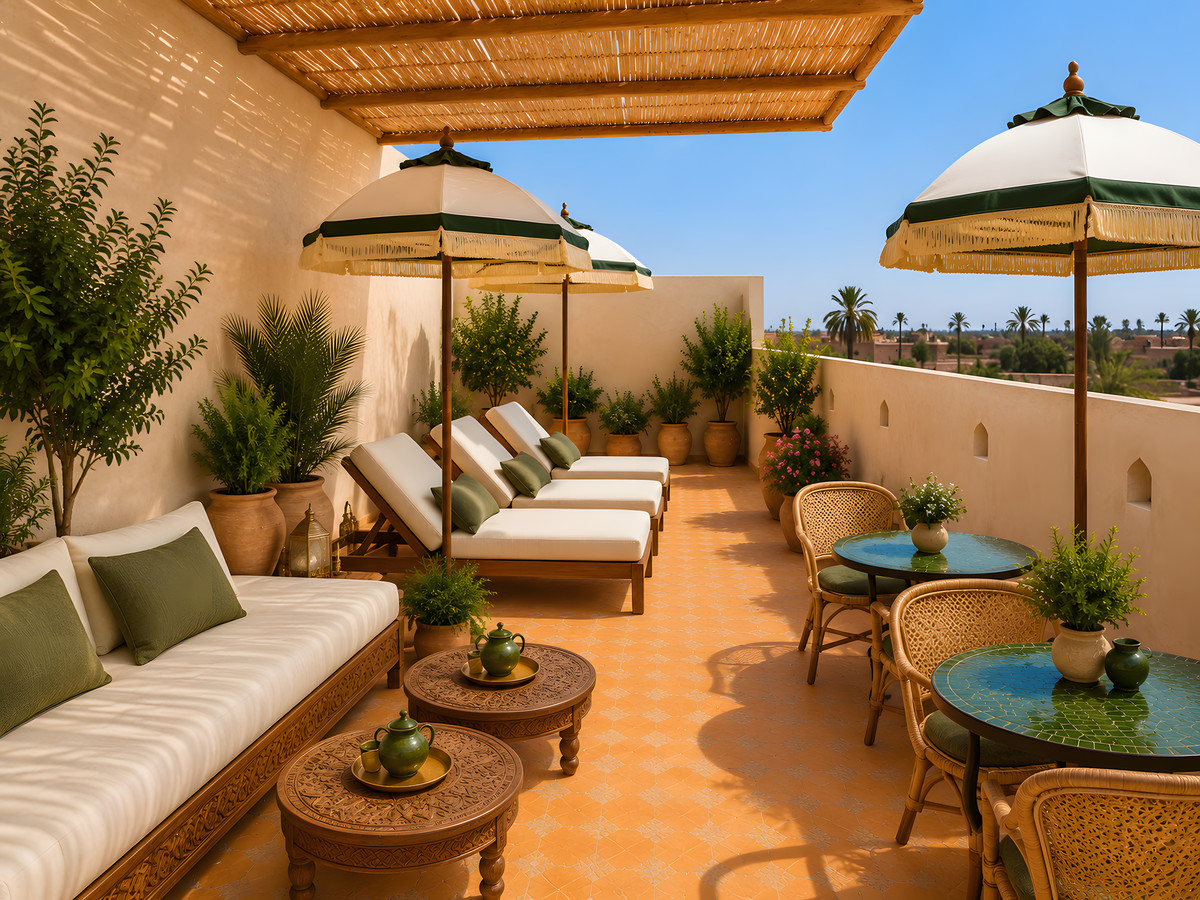
In Marrakech, beauty never reveals itself all at once. It is sensed behind a door, around the turn of an alley, in the unexpected coolness of a patio or the silence of an old house. The city has cultivated a rare art: preserving intimacy, never showing everything, and leaving visitors the pleasure of discovery.
This sense of discretion is rooted in a thousand years of history. Founded in the 11th century by the Almoravids, the medina ranks among the most remarkable historic urban ensembles in the Islamic world. UNESCO inscribed it on the World Heritage List in 1985 for its exceptional historical, architectural and cultural value. From the silhouette of the Koutoubia to the Saadian Tombs, from the Bahia and El Badi palaces to the souks, gardens and old riads, the city is read like a story, each turn revealing a new chapter.
Within this ancient fabric, facades remain sober, almost discreet. They do not yet tell what they protect. Then a door opens, and everything changes: light falls from the sky, zellige tiles catch the reflections, water soothes the space, and the scents of tea, wood, spices or orange blossom awaken memory. The traditional house is shaped around this idea: showing restraint to the outside world and revealing the full richness of welcome only once the threshold has been crossed.
The same care extends naturally to hospitality. Here, receiving someone means more than opening a door: it means taking time to serve tea, ask after someone, prepare a table and guide without imposing. These simple gestures, passed from one generation to the next, give attention as much importance as the setting and welcome a guest as a presence to be honoured.
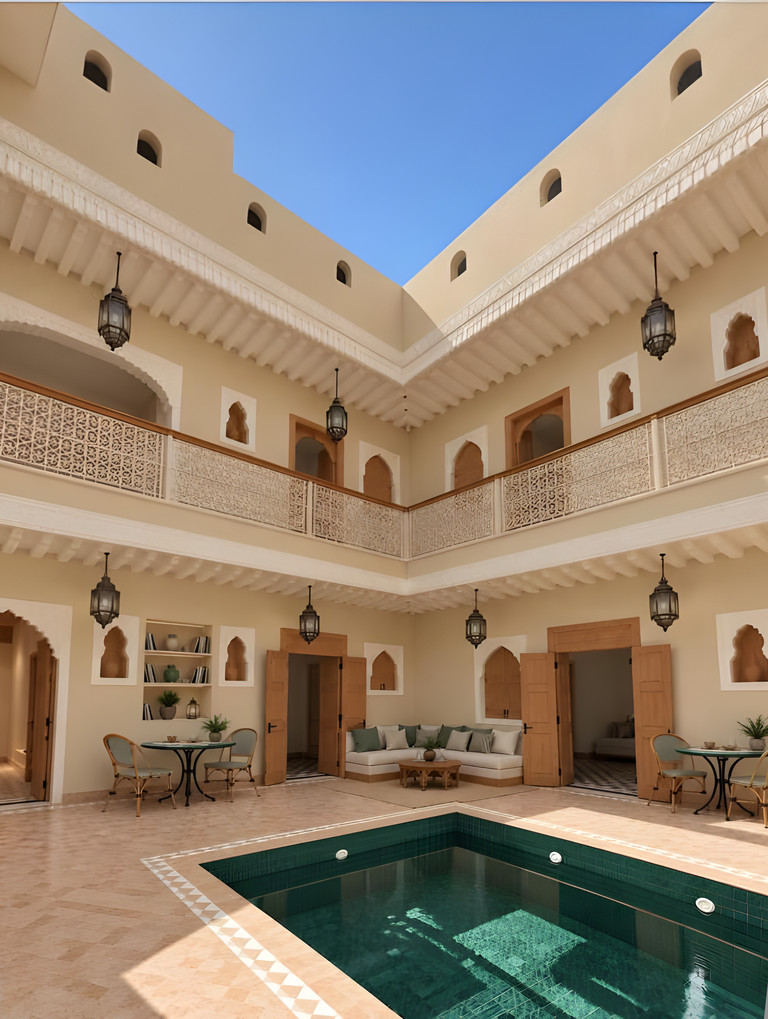
The same thread runs through the hands of artisans and the souks where their skills continue to be passed on. Carved wood, tadelakt, zellige, wrought iron, painted ceilings and woven rugs are all fragments of memory. Every material carries a gesture; every detail tells of patience. On Jemaa el-Fna, that heritage becomes voice, music, story and spectacle. UNESCO recognises this cultural space and its traditions as intangible cultural heritage. Throughout the medina, charm lies less in perfection than in human work, time, and the subtle irregularity that gives places a soul.
Vibrant and secret, sunlit and shaded, the city lives through its contrasts: animated in the souks, peaceful behind its walls. It teaches us to recognise true luxury in what soothes rather than what shines; in what is felt rather than what is displayed. A closed door, a silent patio, soft light on a white wall: sometimes these are enough to express its spirit.
At the heart of this UNESCO-listed medina, Riad Fatimid continues that story with simplicity. Nothing seeks an effect; every detail invites guests to slow down. History, craftsmanship and hospitality come together to offer travellers a deeply Moroccan experience.